

Saving for College Without Sacrificing Your Retirement
With the start of a new school year right around the corner, the cost of higher education is front of mind for many families. For parents, guardians, and grandparents alike, helping a child pay for college is one of life’s most meaningful financial goals. It’s natural to want to provide every opportunity for the next generation, and saving for their education is one way of doing just that.
However, many families unintentionally put their own financial future at risk by prioritizing college savings over retirement. The good news? You don’t have to choose one or the other. With the right strategy, you can work toward both goals. Below are a few guidelines we often share with clients to help build a strong financial foundation while preparing for future education expenses.
The Oxygen Mask Rule
Think back to the safety instructions before every flight: “Put on your own oxygen mask before assisting others.”
The same principle applies to financial planning. While there are many ways to pay for college, there are very few ways to pay for retirement.
Students may have access to:
- Scholarships
- Grants
- Work-study programs
- Financial aid
- Student loans
Retirees have access to:
- No retirement loans
Once your working years are behind you, your savings and investments are expected to provide the income you’ll rely on for decades. Prioritizing retirement today also helps reduce the likelihood that your children will need to financially support you later.
Build Your Savings in the Right Order
Rather than choosing between retirement and education savings, consider building them in this order.
- Build Your Emergency Fund
Before focusing on long-term goals, establish an emergency fund with approximately 3–6 months of living expenses. Having accessible cash for unexpected expenses helps prevent you from dipping into retirement or education savings when life happens.
- Prioritize Retirement
A general rule of thumb is to save 15–20% of your gross income toward retirement through accounts such as:
- Employer-sponsored retirement plans (401(k), 403(b), etc.)
- Tip: If your employer offers a matching contribution, contribute enough to receive the full match. We don’t want to leave any “free money” on the table.
- Traditional or Roth IRA
- Taxable brokerage accounts
- Save for Education
- 529 College Savings Plan: The most common education savings vehicle, offering tax-advantaged growth and tax-free withdrawals for qualified education expenses. This is often the first choice for families due to their ease of use, low investment expenses, and sole focus on education.
- Coverdell Education Savings Account (ESA): While these accounts provide tax advantages similar to a 529 plan, there are contribution and income limitations, holding some families back from being able to utilize a Coverdell.
- Custodial Accounts (UGMA/UTMA): These investment accounts allow you to save on behalf of a child and can be used for more than just education. Keep in mind that once the child reaches the age of majority, they gain full control of the account.
- Taxable Brokerage Account: While these accounts don’t offer education-specific tax benefits, they provide the greatest flexibility. The funds can be used for education or any other financial goal if plans change but lack the tax advantages of the other accounts when used for educational expenses.
Remember—You Don’t Have to Do It Alone
Parents often assume they’ll shoulder the entire cost of college, but that’s not always the case. Many education savings plans allow grandparents, relatives, and friends to contribute directly to a child’s account. Birthdays, holidays, graduations, and other milestones can become opportunities to invest in a child’s future instead of purchasing another toy or gift. Even small, consistent contributions over many years can make a meaningful difference thanks to the power of compound growth.
In Summary
Your retirement and your child’s education are both worthwhile goals, but they don’t have to compete. When deciding where each new dollar should go, think of your financial priorities as a pyramid:
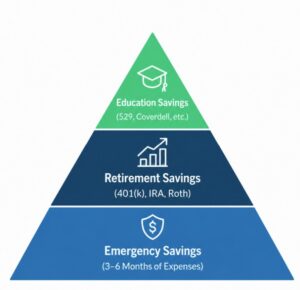
By building a strong retirement foundation first and then saving intentionally for education, you can make meaningful progress toward both goals with confidence. Every family’s situation is different, and there’s no one-size-fits-all strategy. Working with a financial advising team can help you determine the right balance for your family’s goals, ensuring today’s decisions support both your children’s future and your own.